

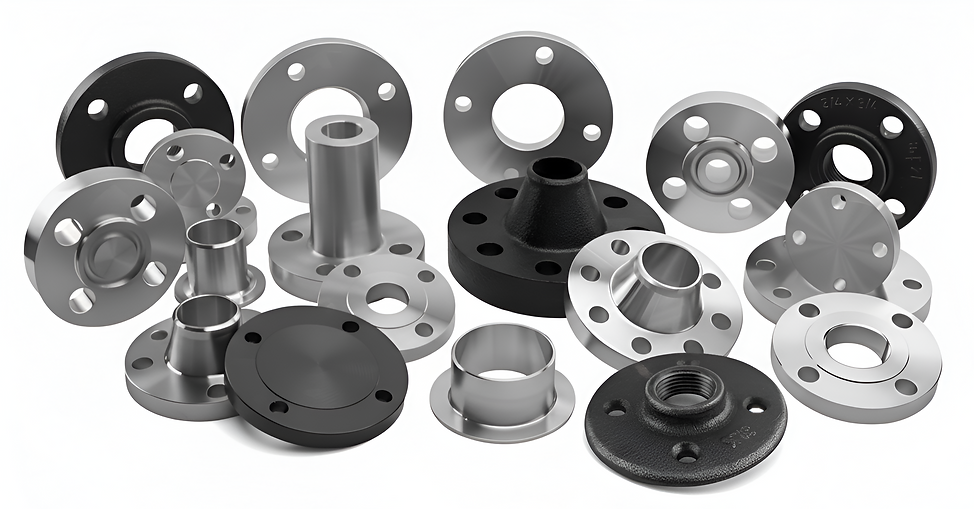
A Flange is a circular piping component, mechanically designed to provide a secure, bolted connection between pipes, valves, pumps, and other equipment. It is widely used to ensure easy access for system maintenance, reliable leak proof joints and structural integrity under high pressure.
Slip On Flanges
A Slip On Flange is a circular, ring like component designed to slide over the outside diameter of a pipe. It can be easily positioned and then secured with welds inside and outside.
Fluids: Water, Oil, Gas, Steam, Air, Chemicals
Applications: Fire Fighting, HVAC, Water Treatment, Plumbing
Connection Methods: Welding, Bolting
Pros: Cost Effective, Easy Alignment
Cons: Lower Strength, Lower Pressure Handling Capacity
.png)
Weld Neck Flanges
A Weld Neck Flange is a piping component recognizable by its long, tapered neck that is welded directly to a pipe. This unique design provides a smooth transition of fluid and transfers stress from the flange to the pipe itself.
Fluids: Crude Oil, Natural Gas, Steam, Corrosive Chemicals, Petroleum
Applications: Oil & Gas, Petrochemical Plants, Marine
Connection Methods: Welding, Bolting
Pros: High Temperature & Pressure Resistance
Cons: Additional Time for Welding & Installation

Threaded Flanges
A Threaded Flange is a circular piping component that features internal screw threads. Instead of using heat to weld the metal, this flange is simply screwed onto a pipe that has matching external threads.
Fluids: Potable Water, Gas, Air, Steam
Applications: Fire Fighting, Oil & Gas, Plumbing, HVAC
Connection Methods: Threading, Bolting
Pros: No Welding Required, Easy to Assemble & Disassemble, Cost Effective
Cons: Limited Pressure and Temperature Ratings

Socket Weld Flanges
A Socket Weld Flange is a piping component featuring a recessed socket in its center. The end of the pipe is inserted into this socket and then welded around the outside hub.
Fluids: Air, Chemicals, Gas, Oil, Steam
Applications: Oil & Gas, Chemical, Power Generation, Construction
Connection Methods: Welding, Bolting
Pros: Superior Strength, Easy Installment
Cons: Crevice Corrosion, Fatigue Sensitivity

Blind Flanges
A Blind Flange is a solid, forged steel disk mechanically designed to seal off the end of a piping system. It has no center bore, acting as a permanent or temporary cap to stop the flow of fluids.
Fluids: Water, Oil, Gas, Steam, Chemicals, Air
Applications: Oil & Gas, Chemical, Petrochemical, Water Treatment
Connection Type: Bolting
Pros: Reusable, Removable, High Pressure Resistance
Cons: Heavy Weight
.png)
Reducing Flanges
A Reducing Flange is a piping component designed to connect pipes of two different diameters directly. While the outer dimensions and bolt pattern match the larger pipe size, the inner bore is drilled to fit a smaller pipe.
Fluids: Water, Steam, Oil, Gas, Cooling Fluids
Applications: Oil & Gas, Chemical, Petrochemical, Water Treatment
Connection Type: Bolting, Welding, Threading
Pros: Cost Effective, Space Optimization
Cons: Flow Disturbance & Turbulence
.png)
Spectacle Blind Flanges
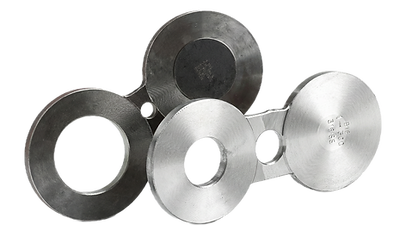
A Spectacle Blind Flange is a safety device manufactured from a single piece of metal cut resembling a pair of eyeglasses. One side is solid to stop flow, while the other side is a hollow ring to allow flow. It is installed between two standard flanges giving maintenance crews a visual guarantee that a pipeline is physically blocked and safe to work on.
Fluids: Oil, Gas, Steam, Chemicals
Applications: Oil & Gas, Chemical, Petrochemical, Power Plants, LNG Facilities, Water Treatment, Food & Beverages
Connection Type: Bolted
Pros: Easy Visual Confirmation, Cost Effective
Cons: Heavy Weight, Space Limitations
Spacer Flanges
A Spacer is a metal ring with an attached handle, mechanically designed to fill the gap between two flanges when a pipeline is in operation. Its primary purpose is to maintain the correct distance and bolt tension between flanges while allowing fluid to pass through freely. It is typically purchased as a set with a Spade Flange and is used in large diameter piping systems.
Fluids: Oil, Gas, Steam, Chemicals, Water
Applications: Oil & Gas, Chemical, Petrochemical, Power Plants, Water Treatment
Connection Type: Bolted
Pros: Ideal for Large Diameter Pipes, Easy Visual Confirmation, Cost Effective
Cons: Labor Intensive, Space Limitations, Misalignment Risks
_edited.jpg)
Spade Flanges
A Spade is a solid metal disk with an attached handle, designed to be inserted between two flanges to physically block the flow of fluid. It is used in the middle of a pipeline to provide isolation during maintenance. It is typically purchased alongside a Spacer Flange and is essential for safety in large diameter systems.
Fluids: Oil, Gas, Steam, Chemicals, Water
Applications: Oil & Gas, Chemical, Petrochemical, Power Plants, Water Treatment
Connection Type: Bolted
Pros: Ideal for Large Diameter Pipes, Easy Visual Confirmation, Cost Effective
Cons: Labor Intensive, Space Limitations, Misalignment Risks

Companion Flanges
A Companion Flange is a piping component, typically threaded or socket welded, designed to act as a mating partner to another flanged fitting or piece of equipment. Its primary function is to transition a pipeline from a threaded or plain end pipe to a flanged connection.
Fluids: Potable Water, Gas, Steam
Applications: Oil & Gas, Fire Fighting, HVAC, Marine, Petroleum
Connection Type: Threading, Socket Weld, Bolting
Pros: Easy Installation & Maintenance, High Temperature Pressure Resistance
Cons: Misalignment & Vibration Sensitive
.png)
Counter Flanges
A Counter Flange is a piping component selected specifically to match the bolt pattern and pressure rating of a flanged piece of equipment. Its primary function is to act as the connecting partner for devices such as pumps, valves, and flow meters.
Fluids: Water, Oil, Chemicals, Steam
Applications: Oil & Gas, HVAC, Plumbing, Construction, Chemical, Petrochemical, Water Treatment, Manufacturing, Marine
Connection Type: Bolting, Welding, Threading
Pros: Robust Sealing, Vibration Resistant, Easy Maintenance
Cons: Installation Complexity
.png)
Floor Flanges
A Floor Flange is a flat, circular fitting designed primarily for structural support rather than fluid transport. It features a central threaded hub to accept a pipe and pre drilled holes around the rim for bolting to a surface. Its main function is to anchor vertical pipes to floors, walls, or ceilings.
Fluids: None
Applications: Construction, Food & Beverages, Manufacturing, Marine, Plumbing, Pharmaceutical
Connection Type: Bolting, Threading
Pros: Structural Stability & Support
Cons: Difficult to Replace
.png)
Lap Joint Flanges
A Lap Joint Flange is a two component assembly consisting of a loose backing flange and a separate stub end pipe fitting. This unique design allows for easy bolt alignment during installation.
Fluids: Chemicals, Water, Steam
Applications: Oil & Gas, Chemical, Petrochemical, Marine, Water Treatment
Connection Type: Welding, Bolting
Pros: Cost Effective, Maintenance Efficient
Cons: Limited Pressure & Load Capacity
.png)
Plate Flanges
A plate flange is a flat circular metal disc with bolt holes around the perimeter, used to connect pipes, valves, and equipment. It is designed specifically for low pressure applications.
Fluids: Water, Gas, Air
Applications: Oil & Gas, HVAC, Chemical, Petrochemical, Power Plants, Marine, Water Treatment
Connection Type: Welding, Bolting
Pros: Cost Effective, Easy Installation & Maintenance
Cons: Limited Pressure & Temperature Suitability
_edited.png)
Puddle Flanges
A Puddle Flange, also known as a Wall Collar or Water Stop, is a flange welded onto the exterior of a pipe section that passes through a concrete structure. It is cast directly inside a concrete wall, floor, or tank and Its primary function is to act as a physical barrier, preventing water or moisture from seeping along the outside surface of the pipe and leaking through the concrete.
Fluids: Water, Gas
Applications: Agriculture & Irrigation, Construction, Water Treatment
Connection Type: Welding
Pros: Structural Protection
Cons: Need for Specialized Labor, Complex Installation

Spigot Flanges
A Spigot Flange, also known as a Flanged Spigot, is a hybrid piping component featuring a standard flange on one end and a plain pipe end on the other. Its primary function is to transition a piping system from a flanged connection to a socket based connection.
Fluids: Water, Oil, Gas, Steam, Chemicals
Applications: Oil & Gas, Agriculture & Irrigation, Chemical, Petrochemical, Power Plants, Marine, Water Treatment
Connection Type: Bolting
Pros: Easy Installation, Withstand Significant Pressure
Cons: Limited Flexibility, Rigidity Limitations
.png)
At Al Mashaan General Trading & General Contracting for Buildings Co., we maintain a comprehensive inventory of Flanges to ensure secure connections for your piping systems. Our stock covers a wide array of global standards essential types such as Slip-On, Weld Neck, Blind, and Threaded Flanges. Whether you require components for low pressure utility lines or high pressure industrial networks, we have the materials ready for you.